Success Stories
Cultivating Confidence With a Chemistry Boot Camp Powered By Aktiv
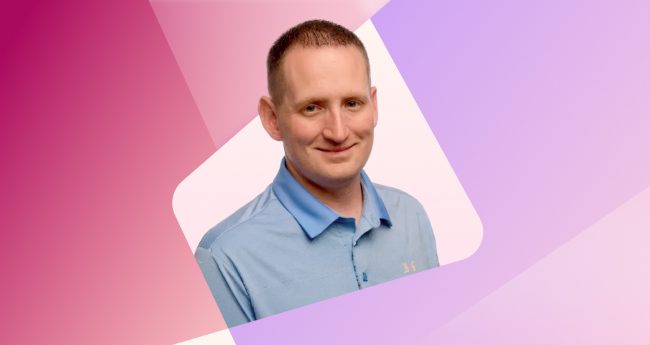
Kayla Green
Professor of Chemistry, Texas Christian University
Share
Helping underprepared chemistry students get up to speed
All students arrive to class with a different level of knowledge and experience—and this was no different for Dr. Kayla Green. It’s why the Texas Christian University chemistry professor partnered with her colleagues to help those intimidated by the thought of having to solve long mathematical equations and navigate large problem sets.
Green previously taught General Chemistry to upwards of 150 students per course section. “Our students are largely pre-health and most of them have to take General Chemistry to pursue graduate work, medical school or dental school,” Green says. In order to tackle the uneven levels of preparedness observed in class, Green knew she had to use education technology to her advantage. “We needed a way to assess students and give them opportunities to show what they know and define their deficiencies.”
The solution? Constructing a six-week boot camp in collaboration with two of her colleagues, Dr. Benjamin Janesko and Dr. Heidi Conrad, who also noted mixed proficiencies. The boot camp, offered every summer to incoming chemistry freshmen at Texas Christian University, is designed to help students identify and reduce their own chemistry knowledge gaps. Green and her colleagues run their program largely with Aktiv Chemistry, which helps students tackle common pain points like basic math, dimensional analysis, stoichiometry and more. Green’s supportive attitude towards chemistry, mixed with Aktiv’s intuitive problems, has successfully helped turn underprepared students into confident chemists—and she’s got the data to show for it.
Giving students a taste of freshman-level chemistry
Green’s philosophy towards student success is simple: give all learners the tailored support they need in a low-stress environment. Here’s how Green and her colleagues have structured their bootcamp program using Aktiv Chemistry.
- Professor videos: Green and her colleagues record videos of themselves explaining difficult concepts presented in each chapter. These videos incorporate topics from the textbook that full-time General Chemistry students use, giving learners a chance to familiarize themselves with the material they may soon encounter.
- Daily assignments: Students complete daily, multi-component assignments using Aktiv Chemistry. “After each topic, they’re asked to complete an Aktiv assignment associated with that specific area of interest. 90–95 percent of our assessments are run through Aktiv,” says Green.
- Simulated exams: Learners complete mock exams using Aktiv at the end of each week that mirror what they might be expected to complete in the actual course.
- Office hours: The three faculty members offer a collaborative, peer-to-peer learning system. “Office hours are where a lot of learning takes place. I see a lot of positive outcomes for students who show up,” Green shares.
Green is one of many faculty who realize that practice makes perfect in the classroom. She and her fellow chemistry faculty enjoy being able to choose from over 20,000 practice problems and activities housed in Aktiv. “We like the problems in Aktiv Chemistry because they match the level of intensity we’re trying to prepare students for—whether graduate school or a career in health care,” says Green.
Maximizing confidence and comprehension ahead of the fall semester
Green and her colleagues could see that intimidated students left the six-week program more prepared and confident. The boot camp team partnered with Texas Christian’s College of Education to quantify the impact of her program on student retention and performance. The result? Improved outcomes across the board. Among the 2021 cohort, it was found that the program gave students a solid academic foundation. “On average, students scored 50–60 percent on our quiz that we would administer before boot camp began. But by the end of the program, their average score is in the 80s,” says Green.
She’s also heartened by the rise in confidence and overall preparedness.
The program has also led to a greater sense of connection and community among students. For a group of timid high school graduates entering university, Green is particularly thrilled that her boot camp gives every student a chance to forge meaningful relationships with their classmates. “Students felt more comfortable walking into General Chemistry because they took the boot camp. They had friend groups on the first day of class. They came in with a level of confidence which is truly a contributing factor to their success in this course,” she says.
About the Faculty
Kayla Green
Professor of Chemistry, Texas Christian University
More Success Stories
Professors from over 700 colleges and universities use Aktiv Chemistry to engage students inside and outside of the classroom. Learn how some of them have transformed their courses.