
- Platform
- Organic Chemistry
Organic Chemistry Homework and Active Learning
Assign auto-graded homework, practice problems, in-class activities, quizzes and exams. Students draw structures and arrow-pushing mechanisms with AktivGrid, while targeted feedback guides them through mistakes.
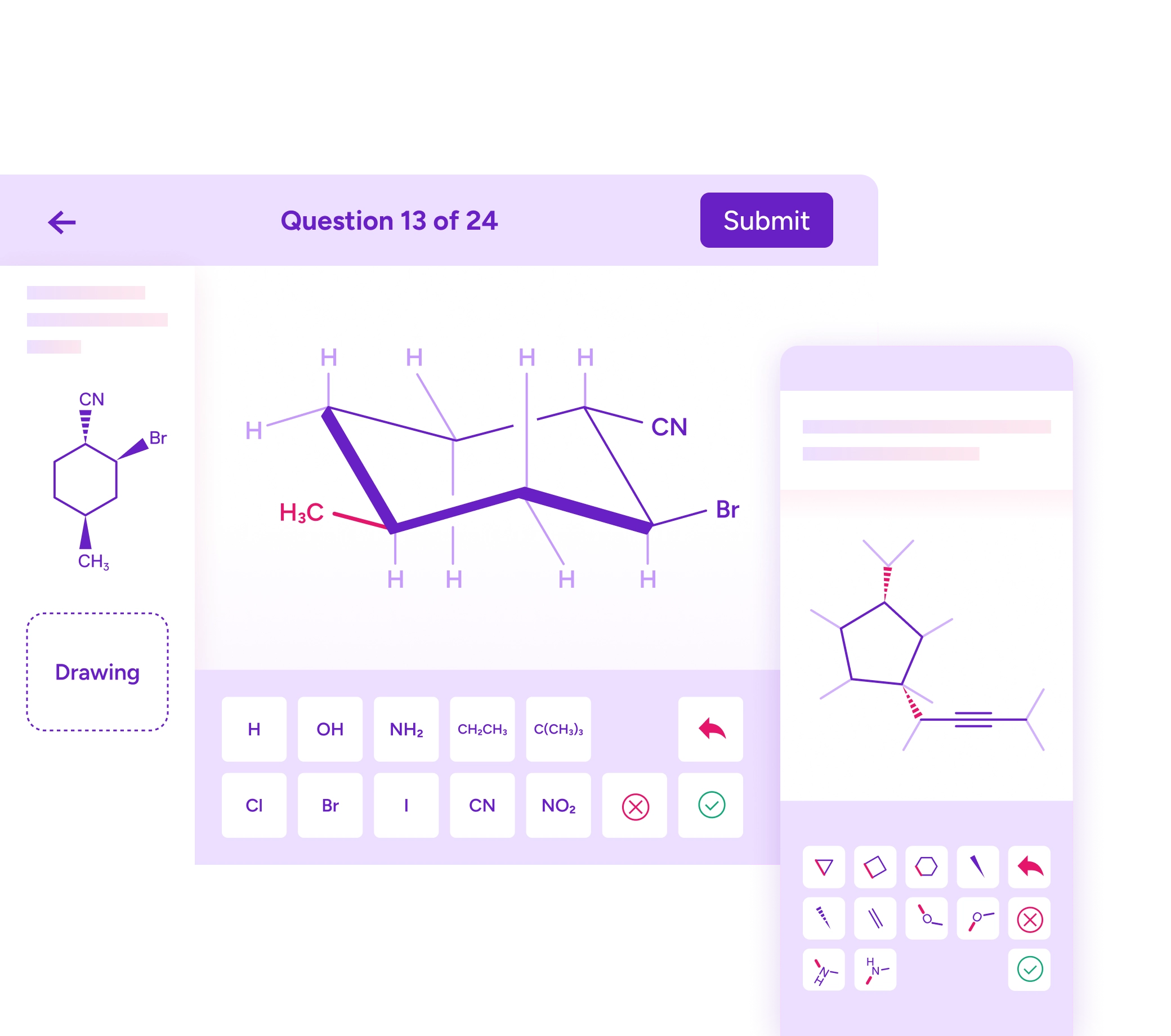
AktivGrid: draw organic structures and mechanisms online
Students build molecules by tapping or clicking with Aktiv’s patented drawing tool. Targeted feedback pinpoints mistakes and guides their next attempt.
Draw on Any Device
Designed for use on any student smartphone and to scale up for larger devices like tablets and laptops.
Designed for Learning
Draw and manipulate cyclic and acyclic compounds as well as chair, Newman and Fischer projections.
Intuitive Interface
AktivGrid’s dynamic interface allows students to focus on chemistry and not cumbersome software.
Works with any Organic Chemistry textbook
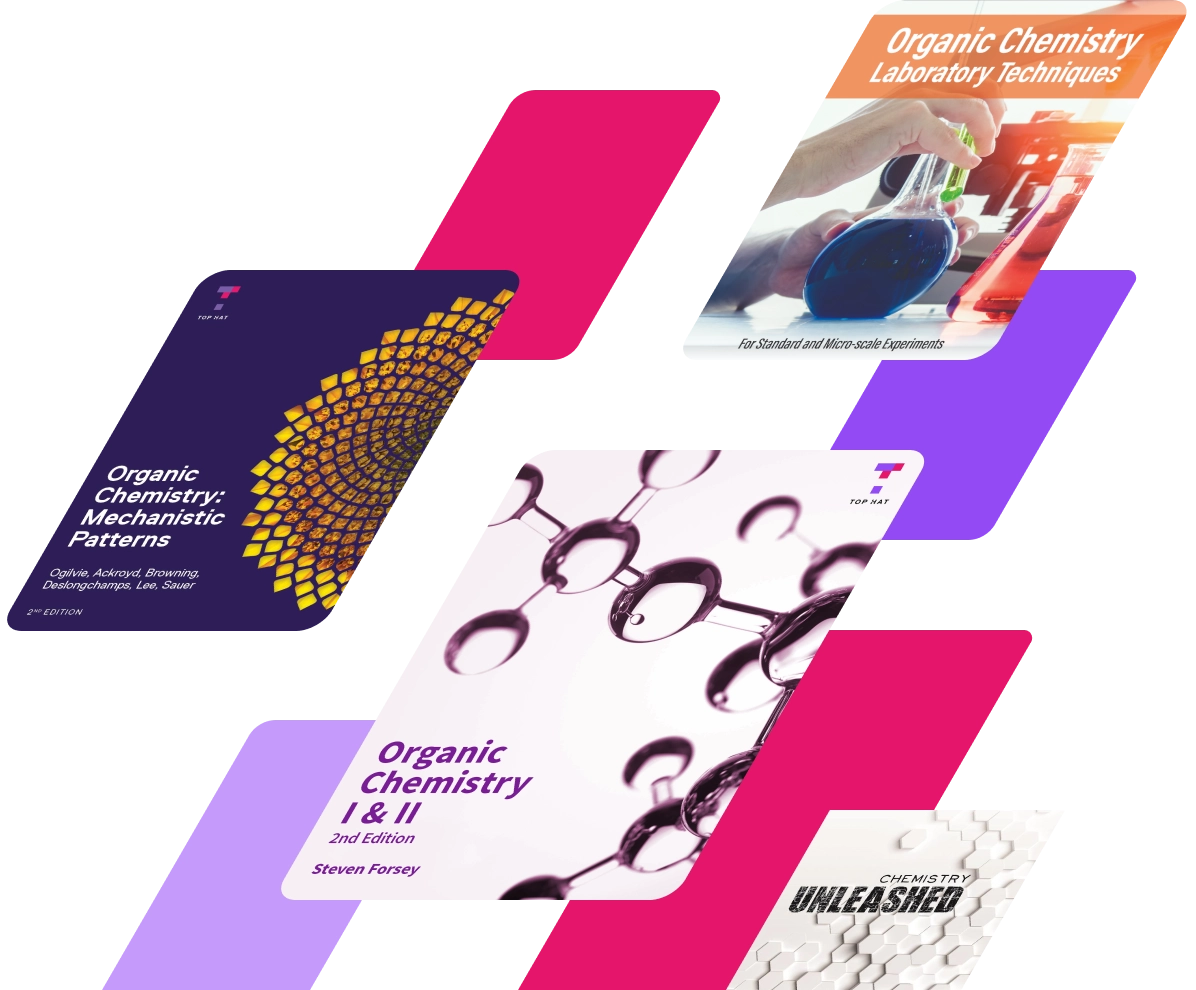
From alkanes to biomolecules, Aktiv covers the full Organic Chemistry I and II sequence or a one-term survey course. Build assignments from the question library or write your own. Integrated textbook options include Top Hat titles and OpenStax’s McMurry Organic Chemistry.
General Chemistry Review
Representing Organic Molecules
Introduction to Organic Reactions and Mechanisms
Alkanes and Cycloalkanes
Chirality and Isomerism
Haloalkanes (Alkyl Halides)
Nucleophilic Substitutions and Elimination Reactions
Alkenes: Structure and Properties
Reactions of Alkenes
Alkynes: Structure, Properties, and Synthesis
Conjugated Pi Systems, Dienes, and Resonance
Aromaticity and Benzene
Reactions of Benzene and its Derivatives
Pericyclic Reactions and Orbital Interactions
Alcohols and Phenols
Ethers, Epoxides, Thiols, and Sulfides
Aldehydes and Ketones
Enols, Enolates, Enamines: Alpha-Carbon Chemistry
Introduction to Organometallic Chemistry
Carboxylic Acids
Carboxylic Acid Derivatives and Nitriles
Amines and Heterocycles
Synthetic Polymers
UV-Vis Spectroscopy
Infrared (IR) Spectroscopy and Mass Spectrometry (MS)
Nuclear Magnetic Resonance (NMR) Spectroscopy
Combined Spectroscopy Problems
Biomolecules: Carbohydrates
Biomolecules: Lipids
Biomolecules: Amino Acids, Peptides, and Proteins
Biomolecules: Enzymes
Biomolecules: Nucleic Acids and Protein Synthesis
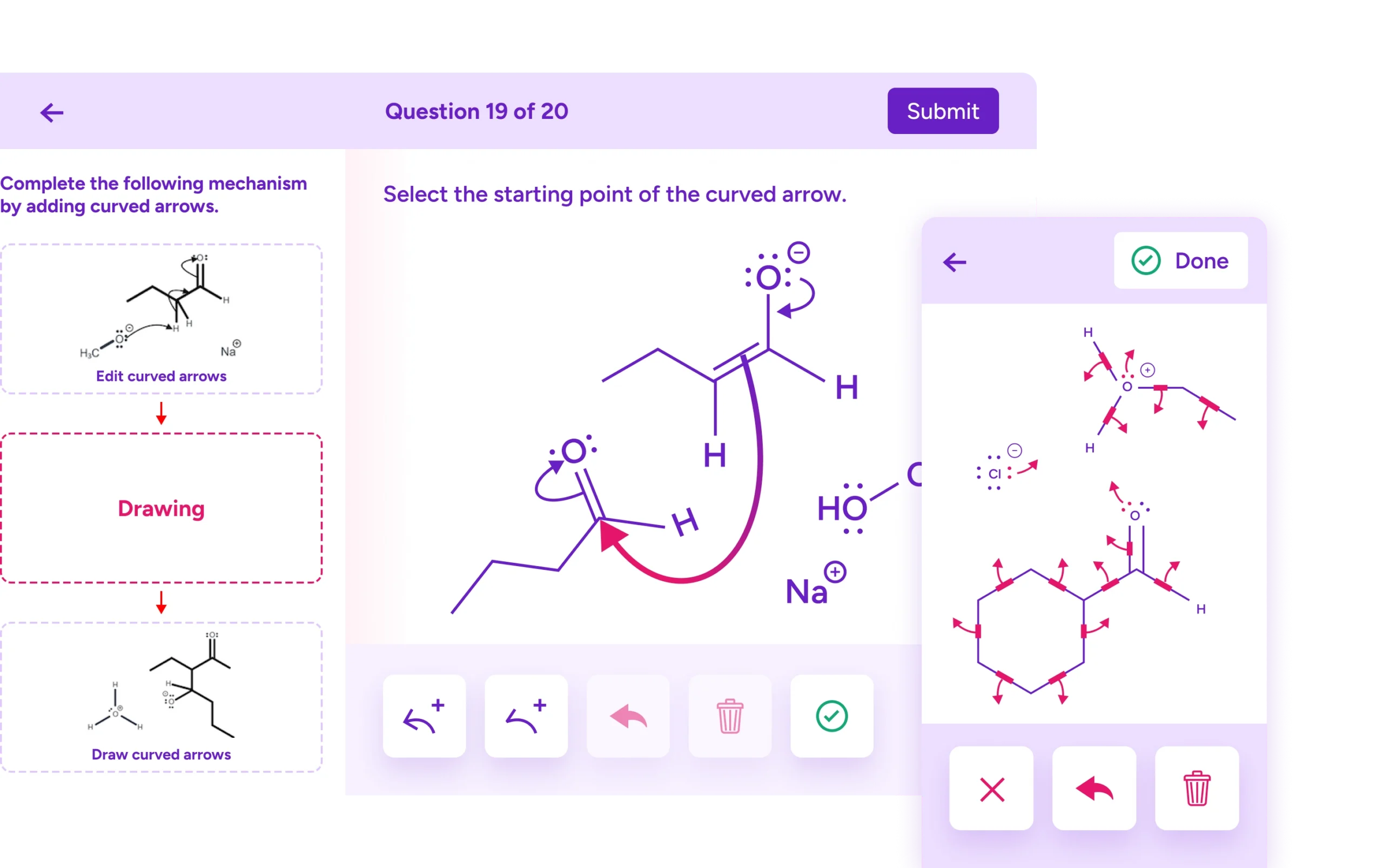
Explore mechanisms and resonance through electron pushing
AktivGrid combines intuitive arrow-drawing tools with a research-based approach that builds conceptual understanding.
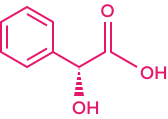
CHIRAL CENTER
You have incorrectly assigned the configuration. Evaluate the 4 atoms directly attached to the stereocenter using the Cahn-Ingold-Prelog (CIP) rules to determine the configuration of the stereocenter and try again.
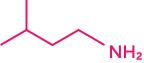
The total number of carbons in the parent chain of your product is incorrect. Consider how the the presence of the nitrile group in reaction step 1 modifies to the original parent carbon chain.
REACTION CONDITIONS
Remember, oxidation reagents have differing oxidizing ability and can typically be considered “weak” or “strong”. Reconsider the oxidation state of your product under these reaction conditions.
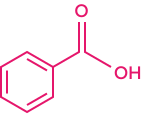
Smart feedback with chemical intelligence
Automatic student feedback recognizes student drawing mistakes to help them learn in the moment.
STRUCTURE
Find mistakes in carbon chain lengths, missing or incorrect functional groups, and regiochemistry.
CONFORMATION
Find mistakes for R/S, E/Z, cis/trans, and cylcohexane chair conformations.
SYNTHESIS
Grading and feedback on each synthesis step as well as reagents, major/minor products, and more.
Organic nomenclature with smart suggestions
Help students master both IUPAC and common naming of every functional group in Organic Chemistry.
Smart suggestions reinforce IUPAC naming assembly rules. Students build up the names from their components.Help students master both IUPAC and common naming of every functional group in Organic Chemistry.
Smart suggestions reinforce IUPAC naming assembly rules. Students build up the names from their components.
Frequently Asked Questions
Which courses does Aktiv Chemistry support?
Aktiv Chemistry supports a year-long Organic Chemistry sequence or a one-term Survey of Organic Chemistry course, in addition to General Chemistry, Introductory Chemistry, GOB, and Biochemistry courses.
What Organic Chemistry practice problems, homework and exams can I assign?
You can build organic chemistry practice sets, homework, in-class activities, quizzes and exams from an extensive library of auto-graded questions. Aktiv covers topics from structure and bonding, stereochemistry and substitution and elimination reactions to spectroscopy and biomolecules. Students draw structures, mechanisms and synthesis steps, and name compounds, with targeted feedback on each attempt. For quizzes and exams, question pools randomize what each student sees, and optional integrated Proctorio online proctoring adds another layer of exam security.
How do students get feedback on structures and reaction mechanisms they draw with AktivGrid?
Rather than simply marking a drawing incorrect or revealing the solution, AktivGrid provides instant, answer-specific feedback using an informative tutoring approach. The platform recognizes common errors in chemical structures, reactions, and synthesis and delivers short, chemistry-specific explanations. This targeted guidance helps students pinpoint where their reasoning went wrong and encourages them to think through the problem differently.
How can students practice naming organic molecules in Aktiv Chemistry?
Smart suggestions help students master both IUPAC and common naming of every functional group in organic chemistry. Students select from suggested options instead of typing, so they can focus on the nomenclature rules rather than syntax errors. Assign nomenclature problems as homework to save more class time for higher-order topics like synthesis and mechanisms.
Do I need to change my textbook to use Aktiv Chemistry?
No. Aktiv’s Organic Chemistry content is designed around common learning objectives and topics taught in sophomore-level Organic Chemistry courses, so you can keep the textbook you already use and build assignments by choosing problems from the library. If you want a built-in option, Aktiv offers integrated titles from Top Hat and OpenStax, including McMurry’s Organic Chemistry.
Can I use Aktiv Chemistry for an online organic chemistry course, and does it work with my LMS?
Yes. Aktiv works for online, in-person and flipped organic chemistry courses. Students and instructors can use it on any iPhone, iPad or Android device, or online with any Mac, PC or Chromebook. Aktiv Chemistry’s gradebook syncs with major LMS platforms, including Canvas, Blackboard, Moodle and D2L Brightspace, and you can customize the gradebook columns to separate assignment types, show individual assignments or display summary columns. Every Aktiv Chemistry instructor also works with a member of our Success Team, who helps with course setup and LMS integration.
